Roofing Materials for South Florida Luxury Homes: Tile, Metal, and What Actually Lasts
5/12/2026
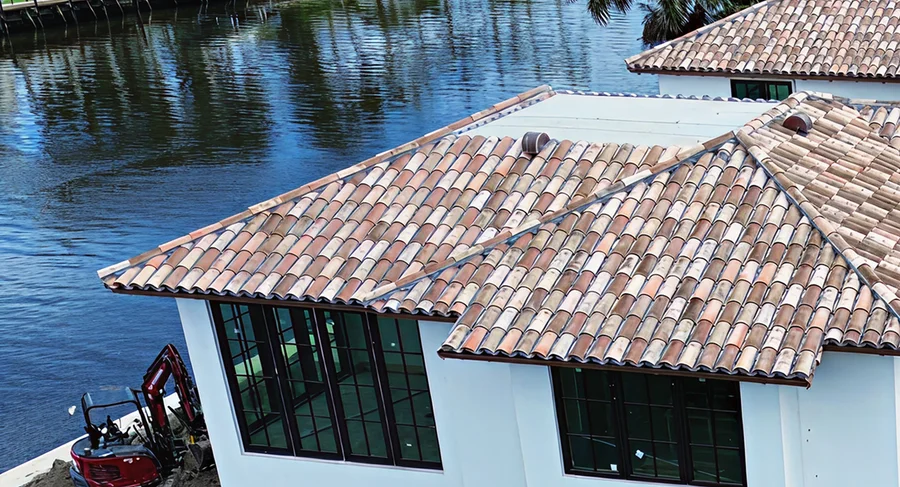
When you've invested in a luxury home in South Florida, the roof isn't just a structural necessity — it's one of the most visible elements of your home's architecture and one of the most important factors in protecting everything beneath it. The wrong material choice shows up twice: first in the aesthetics, then in the maintenance bills.
South Florida's climate is beautiful and brutal in equal measure. The roofing material that looks perfect in a showroom or on a home in Savannah may not hold up to 20 years of hurricane-force wind events, daily UV bombardment, salt air corrosion, and the moisture load of a subtropical climate.
Here's an honest look at the roofing materials that actually perform for luxury homes in this part of the world — from a family that has been installing and maintaining them for nearly 50 years.
Concrete and Clay Tile: The South Florida Standard
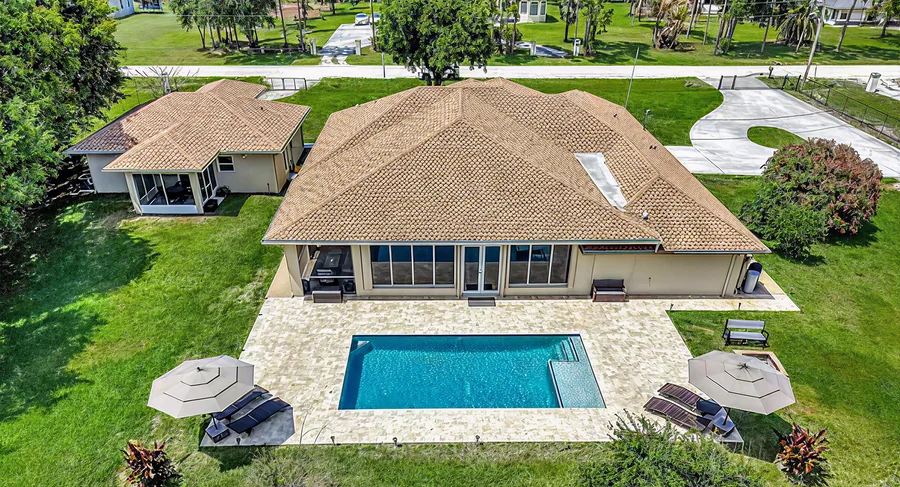
Tile roofing dominates the South Florida luxury landscape for good reason. It's durable, wind-resistant when properly installed, and available in profiles that complement everything from Mediterranean Revival estates to contemporary coastal architecture.
Concrete tile is the workhorse. It's less expensive than clay, holds up well to impact, and can be manufactured in a wide range of profiles and colors. High-quality concrete tile can last 30 to 50 years in South Florida conditions, though the underlayment beneath the tiles will typically need replacement at the 20- to 25-year mark.
Clay tile — including barrel tile and flat interlocking profiles — offers a richer aesthetic and exceptional longevity. Premium clay tiles can last 50 years or more. They're also heavier than concrete, which means your roof structure needs to be engineered to support the load. For estates and custom homes built to specification, this is rarely an issue. For retrofits, it requires structural evaluation.
The critical detail with any tile roof in South Florida is the installation system. Tiles need to be mechanically fastened — not just set in mortar — to meet current Florida wind code. The tile itself may survive a Category 4 storm, but only if it's attached to the deck correctly. This is where contractor experience matters enormously. Talbot Companies has installed tile roofs on some of the most demanding properties in the region, including luxury hotels and high-profile commercial buildings where failure isn't an option.
Standing Seam Metal: Performance Meets Clean Lines
Standing seam metal roofing has gained significant traction in South Florida's luxury market, and for good reason. A properly installed standing seam system offers:
- Superior wind resistance: Concealed fastener standing seam panels are rated for wind speeds well above Florida's High Velocity Hurricane Zone requirements.
- Longevity: Quality metal roofing systems with Kynar (PVDF) finishes can last 40 to 60 years with minimal maintenance.
- Energy efficiency: Metal reflects solar radiation rather than absorbing it, which can meaningfully reduce cooling costs on a large estate.
- Clean aesthetics: The linear profile of standing seam complements modern, transitional, and coastal contemporary architecture.
The trade-offs are cost and acoustics. Metal roofing is more expensive upfront than tile, and without proper insulation and underlayment, rain on a metal roof is loud — which matters in a home where quiet is part of the luxury experience. Both issues are solvable with proper specification and installation.
Salt air is the primary enemy of metal roofing along the coast. Homes in Jupiter or on barrier islands need marine-grade aluminum or properly coated steel with enhanced corrosion protection. Standard galvalume panels that perform well 20 miles inland may show corrosion within a few years at the waterfront. Austin Talbot, President of Talbot Companies, has seen this mistake too many times — the material selection needs to match the specific exposure, not just the general region.
Synthetic and Composite Options
Synthetic slate and composite shake products have improved dramatically in recent years. They offer the look of natural materials with better impact resistance, lighter weight, and lower maintenance. Several products now carry Miami-Dade NOA approvals, which means they've been tested and approved for use in South Florida's most demanding wind zone.
For luxury homeowners who want the aesthetic of slate or cedar shake without the maintenance burden — and without the weight penalty of natural slate — synthetics deserve serious consideration. They're particularly well-suited for homes with complex roof geometries where lighter materials simplify the structural requirements.
That said, not all synthetic products are created equal. Some look convincing from the street; others look like plastic. Walk the Talbot Companies gallery to see how different materials look on actual South Florida homes, not in manufacturer marketing photos.
Flat Roof Systems on Luxury Homes
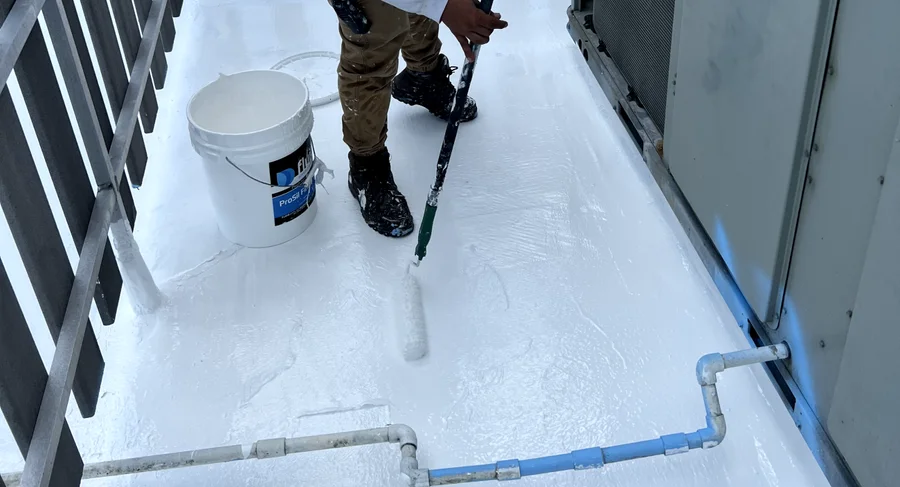
Many contemporary and modern luxury homes in South Florida incorporate flat or low-slope roof sections. These areas require a completely different material approach — typically a high-performance modified bitumen, TPO, or liquid-applied membrane system.
The key consideration for luxury flat roofs is that they're often visible from upper floors, rooftop terraces, or neighboring properties. A premium coating system in a reflective white or custom color keeps the roof attractive while providing the waterproofing performance these low-slope areas demand. Roof restoration and coatings can extend the life of these systems significantly when applied on a proper maintenance cycle.
What Actually Determines How Long Your Roof Lasts
Here's what the Talbot family has learned across 10,000+ jobs and three generations: the material matters, but the installation matters more. A premium tile installed by an inexperienced crew will fail before a standard tile installed by experts. The underlayment selection, the fastening pattern, the flashing details at penetrations and transitions, the ventilation design — these are the factors that separate a roof that lasts its rated life from one that starts leaking in year eight.
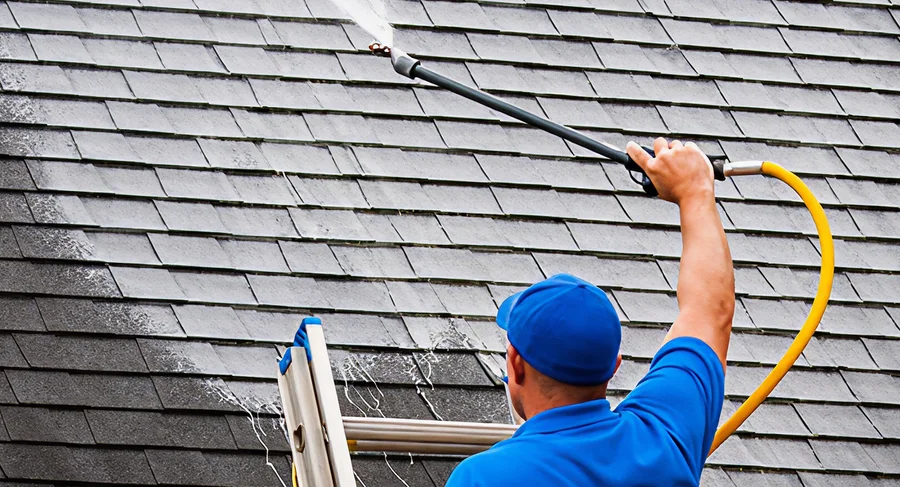
For luxury properties, there's also the maintenance factor. Even the best roofing system needs periodic inspection and maintenance to perform at its potential in South Florida's climate. A residential maintenance plan protects your investment and catches small issues before they become visible — or expensive.
Choosing the Right Material for Your Home
Material selection for a luxury home should be driven by four factors: architectural style, exposure conditions, structural capacity, and long-term maintenance tolerance. The best choice for an oceanfront contemporary in Miami is different from the best choice for a Mediterranean estate in West Palm Beach.
Talbot Companies has been guiding luxury homeowners through this decision since 1975. We've roofed properties alongside the Ritz-Carlton and Mercedes-Benz dealerships — projects where material performance and aesthetic standards are non-negotiable. Contact our team for a consultation that starts with your home's specific architecture and exposure, not a sales pitch for whatever we have on the truck.