

Roofing and Painting Tequesta's Waterfront Homes: What Makes It Different
There's a reason the most experienced contractors in South Florida talk about waterfront work differently than they talk about everything else. It's not a matter of scope or scale — a waterfront home in Tequesta isn't necessarily larger than a comparable inland property. It's a matter of what the environment demands of every material, every system, and every decision made during a roofing or painting project.
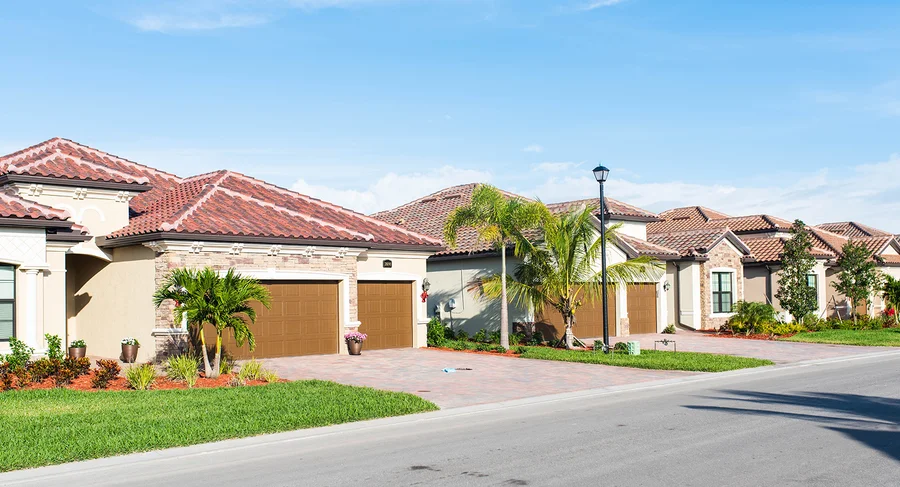
Tequesta's waterfront properties sit at one of the most environmentally demanding intersections in residential real estate. The Loxahatchee River, the Intracoastal Waterway, and the Atlantic just beyond — this is a marine environment, not a subtropical one with occasional sea breezes. Salt is in the air, in the moisture, and in the ground. UV levels are among the highest in the continental United States. Wind exposure is real and seasonal. And the homes themselves — many of them older Mediterranean-style properties with tile roofs, stucco exteriors, and detailed architectural features — require hands that know what they're doing.
For Tequesta homeowners on or near the water, understanding what makes roofing and painting work on these properties genuinely different is the foundation for making good decisions about contractors, materials, and the investment required to protect and maintain what is, for most people, their most significant asset.
The Marine Environment and What It Does to a Home
Salt air is the defining environmental factor for Tequesta's waterfront properties, and its effects are more pervasive than most homeowners initially appreciate. It isn't just a corrosion concern for metal surfaces — though it is certainly that. Salt-laden moisture infiltrates every component of a building envelope, accelerating degradation in ways that compound over time if the right materials and maintenance practices aren't in place.
On a roofing system, the primary salt air vulnerabilities are in the metal components: fasteners, flashing, drip edge, ridge caps, and any decorative metalwork. Standard galvanized fasteners that perform adequately on an inland property will show visible corrosion within a few years on a Tequesta waterfront home. Failed fasteners compromise the structural integrity of the roofing system — not just at the point of failure, but by allowing movement and stress to transfer to adjacent components. Flashing that corrodes loses its waterproofing function at the exact locations — valleys, penetrations, transitions — where water management is most critical.
On exterior paint systems, salt air attacks adhesion. The bond between a paint film and the substrate beneath it is a chemical relationship, and salt crystals that accumulate on and beneath the film disrupt that bond mechanically and chemically. Paint that should last eight to ten years on a well-maintained inland stucco exterior may begin failing at four or five years on a waterfront property where salt accumulation isn't addressed regularly.
UV intensity compounds all of the above. South Florida's year-round solar radiation degrades paint binders, roof underlayments, sealants, and coating systems at a rate that is simply faster than in almost any other residential market in the country. Materials need to be specified with this degradation rate in mind — not just for performance at installation, but for performance three, five, and ten years out.
Wind is the third factor. Tequesta's open coastal position means the homes here experience higher sustained winds and more frequent gusts than properties just a few miles inland. During hurricane season this becomes a life-safety and structural concern, but even outside of named storms, chronic wind exposure stresses roofing systems at ridges, eaves, and flashings, and drives salt-laden moisture into every gap and penetration.
What This Means for Roofing on Waterfront Properties
The implications of the marine environment show up at every stage of a roofing project on a Tequesta waterfront home — in material selection, in system specification, in installation details, and in the ongoing maintenance that determines whether the investment holds up over time.
Material Selection for Coastal Exposure
For pitched roofs, clay tile remains the most appropriate material for Tequesta's waterfront homes from a pure performance standpoint. Fired clay is chemically inert in a salt air environment — it doesn't corrode, doesn't degrade under UV, and doesn't react to moisture the way metal or asphalt-based products can. The vulnerabilities in a clay tile roofing system on a waterfront property tend to be in the components around the tile: the underlayment, the mortar at ridges and hips, and critically, the fasteners and flashing.
Metal roofing is increasingly common on Tequesta waterfront properties, and when properly specified it performs extremely well. The specification details matter enormously, however. Galvanized steel is inadequate for direct waterfront exposure — Galvalume or aluminum panels are the appropriate base material. Fasteners must be stainless steel or appropriately rated for coastal exposure. Coatings need to be PVDF-based — Kynar 500 or equivalent — not standard polyester finishes that will fade and chalk within a few years in direct coastal sun. Standing seam installation, with concealed fasteners and field-welded seams, eliminates the exposed fastener vulnerabilities that are a chronic problem on older screw-down metal roofing systems.
Asphalt shingles are rarely the right answer for Tequesta waterfront properties. The combination of UV intensity, salt air, and wind exposure compresses service life significantly — and on high-value properties where the cost of the work relative to the asset value argues for the longest possible service life, the economics of a shorter-lived material become difficult to justify regardless of the lower initial cost.
Fastener and Flashing Specification
This is where the difference between a Tequesta contractor who understands coastal work and one who doesn't becomes most apparent — and most consequential. On a Tequesta waterfront home, every fastener in the roofing system should be stainless steel or hot-dipped galvanized at minimum, with stainless strongly preferred for the most exposed positions. Every piece of flashing — valley, step, counter, and base — should be specified in a material rated for coastal exposure: copper, stainless steel, or aluminum depending on the application and the adjacent materials.
The compatibility of metals matters in a marine environment in ways that aren't always obvious. Copper and aluminum in direct contact create a galvanic cell that accelerates corrosion of the aluminum — a detail that an inexperienced contractor may not know to address. The right specification anticipates these interactions and separates dissimilar metals with appropriate barriers.
Underlayment and Waterproofing
For waterfront properties, the underlayment specification deserves more attention than it typically receives. Felt underlayment — still used in many standard residential applications — is inadequate for high-exposure coastal conditions. Synthetic underlayments offer better moisture resistance, better UV stability during the installation window before tile or metal is placed, and longer service life. Self-adhering modified bitumen membranes at valleys, eaves, and penetrations provide an additional layer of waterproofing protection at the locations most vulnerable to wind-driven rain.
Maintenance Considerations
A well-specified and properly installed roof on a Tequesta waterfront home will still require more frequent maintenance attention than a comparable system on an inland property. Annual inspections to check fastener condition, flashing integrity, mortar at ridges and hips, and underlayment condition at exposed edges are appropriate for direct waterfront exposure. Salt accumulation should be addressed — gentle low-pressure washing of tile surfaces to remove salt and biological growth extends both the aesthetic life and the functional life of the system.
What This Means for Painting Waterfront Properties
Exterior painting on a Tequesta waterfront home is a project where the specification and preparation decisions made before a brush touches the wall determine most of the outcome. The environment will find every weakness in the paint system — inadequate adhesion, insufficient moisture resistance, incompatible sealants, or undertreated biological growth — and it will find these weaknesses faster than the same shortcut would show up on an inland property.
Surface Preparation for Coastal Stucco
The vast majority of Tequesta waterfront homes have stucco exteriors, and stucco that has been exposed to salt air for years requires thorough preparation before any coating system is applied. Salt crystals that have accumulated in the surface pores of the stucco need to be removed, not painted over. Pressure washing is the starting point, but the technique matters — high-pressure washing that drives moisture deeper into the stucco is counterproductive. Appropriate pressure, appropriate detergent chemistry, and adequate dry time before coating application are all elements of preparation that require experience to execute correctly.
Biological growth — mildew, algae, and in some cases lichen — is a persistent concern on north-facing walls, shaded areas, and soffits in Tequesta's humid environment. Growth that is simply pressure-washed off without chemical treatment will regrow through the new paint within a season. A proper biocide treatment, appropriate dwell time, and thorough rinsing are required to address biological contamination in a way that actually extends the paint system's life.
Failed caulking at windows, doors, utility penetrations, and architectural joints is both a paint failure point and a water infiltration risk. On a waterfront property where wind-driven rain is a recurring event, every gap in the building envelope at these transitions is a pathway for moisture. All caulking should be evaluated and replaced where it has hardened, cracked, or lost adhesion — and the replacement material needs to be appropriate for the exposure conditions, which rules out standard paintable latex caulk in most waterfront applications.
Coating System Specification
For waterfront stucco in Tequesta, the coating system needs to be built around 100% acrylic chemistry with high resin content, a mildewcide package appropriate for a high-humidity coastal environment, and UV-stabilized pigments that resist the fading that Florida's sun accelerates in standard colorants.
Primer specification is critical and non-negotiable. A masonry primer formulated for high-alkalinity substrates and coastal conditions provides the foundation that topcoat performance depends on. On surfaces showing adhesion loss or extensive previous paint buildup, a penetrating bonding primer may be required before any other coating. Skipping or shortcutting primer on a Tequesta waterfront property is the most common reason paint systems fail before they should.
Elastomeric coatings deserve serious consideration on older waterfront homes where hairline cracking in the stucco is present — which describes a significant portion of Tequesta's housing stock. An elastomeric system provides a flexible, waterproof membrane that bridges small cracks and accommodates the structural movement that causes them, rather than simply coating over a substrate that will continue to move. On a waterfront property where moisture infiltration through stucco cracks is a concern, the upgrade from a standard paint system to an elastomeric one is often justified by the protection it provides.
Color Selection in a Coastal Context
Color decisions on Tequesta waterfront properties involve both environmental performance and HOA considerations that are specific to each community. From a performance standpoint, lighter colors absorb less solar heat, which reduces thermal stress on the paint film and extends the interval between repaints. Deep saturated colors — particularly organic reds, bright yellows, and deep blues — are more susceptible to UV fading in direct coastal sun and require products with specifically UV-stabilized pigment systems if they're to hold their appearance over time.
HOA design guidelines in Tequesta's waterfront communities frequently include approved color palettes, and the approval process needs to be completed before any project commitment is made. Some communities along the water have guidelines that reflect the coastal character of the neighborhood and limit the range of colors available on main exterior elevations. Working within these constraints while still achieving a result that enhances the property's appearance is a straightforward task for a contractor who works regularly in these communities.
The Contractor Question
Everything described above — the material specifications, the system details, the preparation requirements, the maintenance implications — requires a contractor who has the knowledge to get them right. And on a Tequesta waterfront property, the consequences of hiring someone without that knowledge show up clearly and relatively quickly.
A contractor who doesn't know the difference between Galvalume and galvanized steel, who doesn't understand galvanic corrosion between dissimilar metals, who treats coastal stucco prep the same way they'd treat a house twenty miles inland, or who hasn't worked in Tequesta's HOA communities will produce work that looks acceptable at completion and reveals its shortcomings within a few years.
The questions to ask are specific. What fastener material do they specify for coastal roofing applications, and why? What primer system do they use on waterfront stucco, and what does their mildew treatment process look like? Have they worked on properties in your community before, and can they show you completed work? How do they handle the Tequesta HOA approval process? A contractor who knows this environment answers these questions in detail without hesitation.
Local experience matters in ways that go beyond technical specification. A contractor who has been working Tequesta's waterfront neighborhoods for years knows the inspectors, knows the HOA processes, knows the suppliers with the right products in stock, and has established relationships that make the practical management of a project smoother. This isn't a soft benefit — it affects timelines, compliance outcomes, and the quality of the result in concrete ways.
The Long View on Waterfront Home Maintenance
Tequesta's waterfront properties are among the most valuable residential real estate in Palm Beach County, and maintaining that value requires treating the building envelope — roof and exterior paint system — as the critical infrastructure it actually is rather than a periodic expense to be minimized.
The most expensive roofing and painting outcomes for waterfront homeowners almost always trace back to the same root cause: decisions made to reduce upfront cost that compromised the specification, the preparation, or the materials used. The savings realized at project time are typically recovered by the environment within a few years, and the cost to address premature failure — particularly on high-value properties with complex architecture — significantly exceeds what was saved.
The right framework for a Tequesta waterfront homeowner isn't the lowest cost per project. It's the lowest cost per decade, accounting for service life, maintenance requirements, and the protection provided against the moisture infiltration and structural damage that inadequate systems allow. Viewed through that lens, the investment in appropriate materials, proper specification, and experienced local contractors is straightforwardly the right decision.
Get a Free Roofing or Painting Estimate Today
Talbot Companies has served South Florida's residential and commercial property owners for over 54 years. We work with Tequesta's waterfront homeowners on roofing and painting projects where the environment demands experience and the properties demand excellence. Contact us online for a free estimate, or call 561-658-1113 | talbotcompanies.com